

Crawl Space Services

Damp crawl space?
Start with the cause.

Moisture, standing water or a damaged barrier? Compare the work your home actually needs.

Explore the service guides
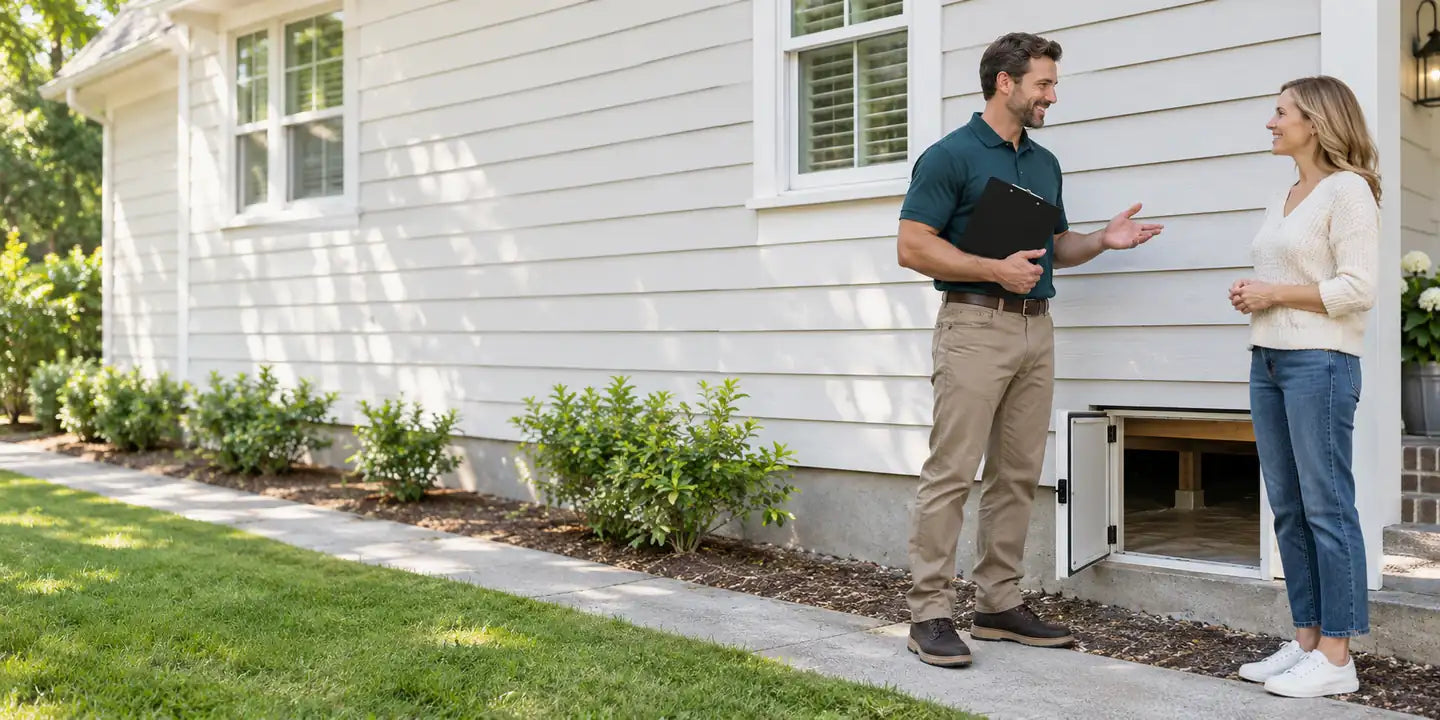
Illustrative crawl-space assessment scene with a technician and homeowner outside a house

Service area near Stem, North Carolina

Call with your property ZIP code to check availability within about 25 miles of Stem.

Example ZIPs to check
Stem, North Carolina (27581) · Butner, North Carolina (27509) · Creedmoor, North Carolina (27522) · Oxford, North Carolina (27565) · Franklinton, North Carolina (27525) · Youngsville, North Carolina (27596) · Durham, North Carolina (27701) · Wake Forest, North Carolina (27587) · Hillsborough, North Carolina (27278) · Henderson, North Carolina (27536) · North Raleigh, North Carolina (27614, 27615).

Frequently Asked Questions

Does a torn vapor barrier mean I need encapsulation?

No. The damage needs assessment, but it does not by itself select the full scope. Ask what was inspected and why each proposed item is needed.

Does seeing water after rain prove where it entered?

No. Report the observation and timing, then ask for findings and any investigation still needed before choosing work.

Can I request a smaller repair?

Yes. State the preference and ask whether the assessor accepts that job and considers it suitable for the actual conditions. Keep the reason and exclusions in the written proposal.

Service guides

Commonly Asked Problems and Immediate Solutions

Find the guidance that matches your next decision.

Crawl space decisions

Get the crawl space assessed before choosing a repair package

A torn ground cover, damp smell or report of water is a reason to investigate. None of those observations alone tells you whether a patch, a new barrier, drainage work or encapsulation is the right scope.

Describe what happened, not what you think caused it

Gather inspection notes, photos, dates and earlier work records you already have. Tell the assessor which conditions you observed yourself and which were reported by someone else. Note whether water was seen after rain, where a cover was damaged, and whether any areas were inaccessible.

You do not need to enter an unsafe or inaccessible space to make a request. Ask the assessor to distinguish inspected findings, possible causes and work that still needs another trade or further investigation. Prepare for the assessment visit.

Compare the work actually proposed

  • Damaged ground cover: ask whether a limited repair or replacement is appropriate for the assessed condition. Compare barrier and broader scope.
  • Reported water or recurring dampness: ask what the assessor found about the source and what must be addressed before covering the area. Rain timing alone does not identify the cause. Review water and prerequisite questions.
  • Full encapsulation proposal: ask which surfaces, seams, openings and related work are included, what is excluded, and why the broader scope is recommended. Read the scope guide.

Require a quote you can compare

Ask for the inspected findings, measurements or areas used to define the work, each line of proposed work, material and labor inclusions, work by other trades, and the completion criteria. Clarify assessment charges, change orders, return visits and aftercare before you approve the job. A package name alone does not tell you what will be installed.

Use the written quote guide and completion and return-visit guide to compare proposals on the same scope.

Before You Book

Before agreeing to work, confirm the actual business, property address, assessment scope, fees and appointment details directly with the assessor.

Talk through your next step.

Call Now