Reached circulation
After one 20-gram labeled milk-protein meal, about 55% of protein-derived amino acids appeared in circulation within five hours.
Primary tracer researchHUMAN PERFORMANCE · MARTIAL ARTS · PRACTICAL FITNESS
Evidence-linked training, measurable drills, intelligent recovery, and martial-arts practice built around capability—not appearance alone.
The arithmetic is simple. The physiology is not. Fitness changes how much useful work you can perform. FAST asks how the body allocates stored fuel, lean tissue, and functional capacity when conventional food is absent and a defined essential-amino-acid formulation is supplied.

THE FUEL YOU ALREADY CARRY
Body fat is stored energy, but the existence of that energy does not tell us how much useful performance can be preserved, which tissues the body will use, or how those tradeoffs change over time.
200 lb×10%=20 lb fat mass
Illustrative arithmetic based on an estimated body-fat percentage. It does not establish how much energy can be accessed safely, how long function can be preserved, or what any individual should attempt.
After one 20-gram labeled milk-protein meal, about 55% of protein-derived amino acids appeared in circulation within five hours.
Primary tracer researchSkeletal muscle took up about one-fifth of those circulating dietary amino acids. Uptake is not the same as permanent muscle gain.
Follow the amino acidsAfter whole-body resistance exercise, 40 grams of whey produced about 20% greater acute muscle-protein synthesis than 20 grams in 30 trained young men.
Read the primary studyIn a supervised trial using an approximately 40% energy deficit and intense training, the higher-protein group retained a stronger body-composition outcome.
Review the randomized trialThese small, short-term studies answer different questions. They do not establish a fixed “protein-to-muscle conversion rate,” validate prolonged fasting, or predict an individual result.
STRENGTH & CONDITIONING
Useful strength and conditioning connects an exercise to a real capability: force, work capacity, movement quality, repeatability, or recovery. A timer and a training log do not make every session scientific, but they can replace guesswork with a visible record of load, pace, consistency, and change.
Explore measurable performance
THE PERFORMANCE BRAND
Strength creates options. Conditioning extends them. Skill directs them. Recovery makes the next useful effort possible.
Build durable force production, work capacity, mobility, and repeatable performance.
Develop timing, distance, composure, disciplined pressure testing, and situational judgment under qualified coaching.
Use sleep, mobility, workload, nutrition, and return-of-performance signals to prepare for the next session.
Turn the learning process into useful content, shared practice, and accountable collaboration.
MEASURE THE SKILL, NOT THE STORY
A repeatable battery could combine simple reaction, choice reaction, inhibition, movement accuracy, sequence learning, fatigue, and recovery. The challenge is to separate genuine performance change from practice effects, motivation, equipment error, and normal day-to-day variation.
See the proposed drill battery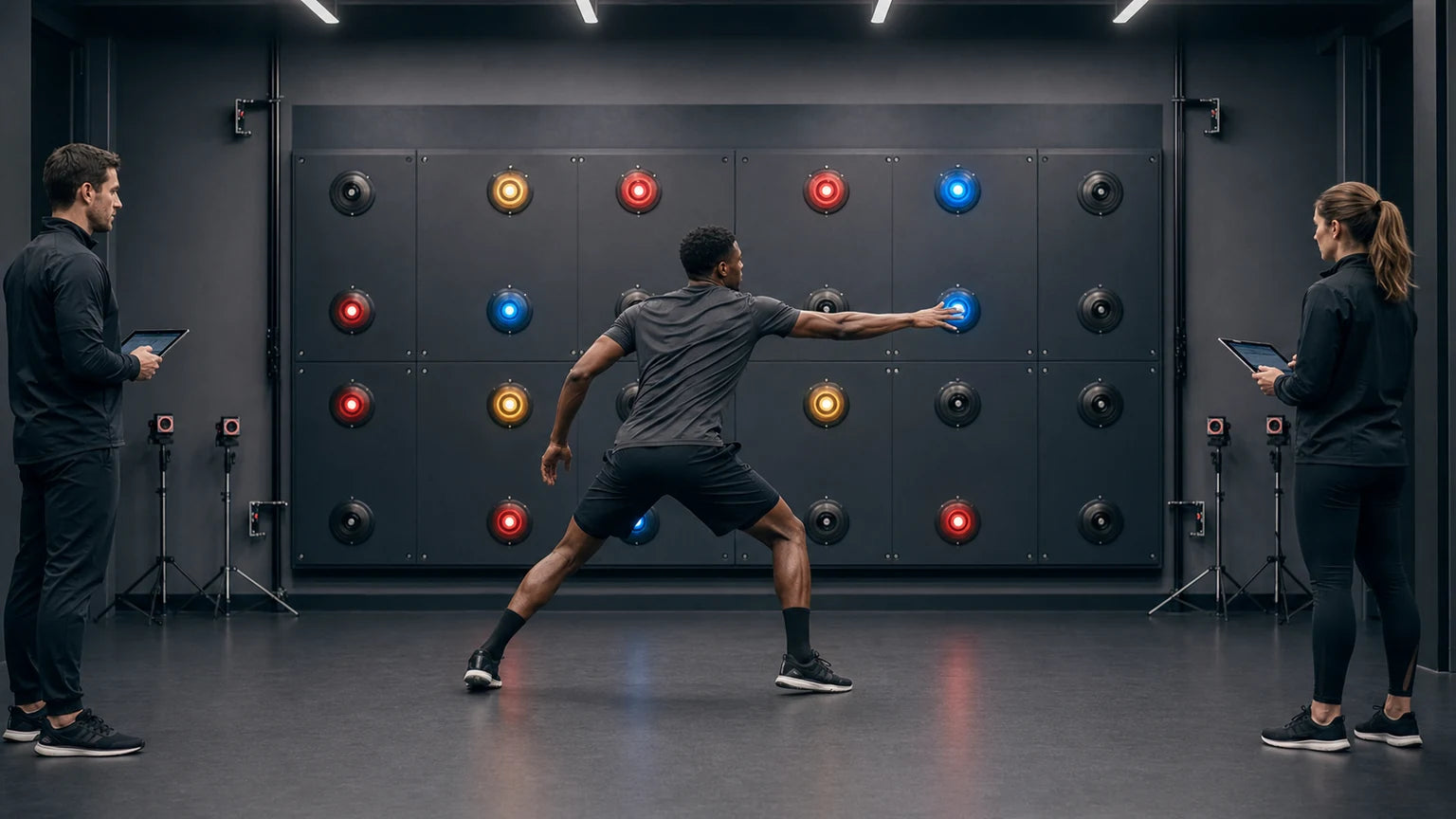
ART OF SURVIVAL · CHEAT CODES
Cheat Codes turns useful research into decisions you can carry into training. These four highlights open into a 20-rule library covering strength, muscle growth, conditioning, recovery, nutrition, measurement, and martial arts.
Educational content only. Results depend on the person, protocol, setting, and follow-through.


CHEAT CODE 01 · FOLLOW-THROUGH
A named time, place, and training partner can turn “I should train” into a concrete commitment. In one 774-person field experiment, the group whose reward required attending with a friend visited about 35% more often than the group earning the same reward individually. That result supports testing social accountability—not assuming it works for everyone.

CHEAT CODE 02 · PROTEIN
Digestion releases amino acids for muscle and the rest of the body. In a five-hour tracer study of 12 young men after 20 grams of labeled protein, about 55% of the dietary amino-acid supply appeared in circulation and roughly one-fifth of that circulating supply was taken up by skeletal muscle. The practical levers are quality protein, purposeful resistance training, and recovery.
Trace dietary amino acids See the post-training dose response Explore the FAST hypothesis

CHEAT CODE 03 · CONDITIONING
The original six-week cycling study used a highly specific protocol: seven to eight 20-second bouts at about 170% of VO2max, separated by 10-second rests, five days per week, in a very small sample. It is evidence that one demanding protocol produced aerobic and anaerobic adaptations—not proof that every four-minute circuit is “Tabata.” Record the work, recovery, and output.
Read the original interval study See a randomized body-composition trial

CHEAT CODE 04 · SELF-PROTECTION
Self-protection is a chain: assess risk, acknowledge danger, set a boundary, act, and exit. In a randomized trial of 893 first-year university women, a multi-component program was associated with a lower one-year rate for the study’s primary completed-assault outcome: 5.2% versus 9.8% in the information-only comparison group. The measured benefit belongs to the complete program—not one target, technique, or universal promise.
Explore the Women’s Self-Protection initiative Read the primary research
METABOLIC FIELD NOTES
Open each note for a plain-language metabolic lever, the study behind it, and the context needed to use it intelligently. These are educational summaries—not personal medical or nutrition instructions.
Dietary protein becomes a shared amino-acid pool. Enzymes, immune proteins, organs, connective tissue, energy metabolism, and muscle-protein turnover all draw from it. Training, total diet, dose, amino-acid composition, age, and the amount of muscle exercised shape the muscle-protein-synthesis response.
In a four-hour post-exercise study of six young men, the measured response rose through 20 grams of egg protein and the study did not detect a greater response at 40 grams. That is not a universal “20-gram absorption limit.” A later tracer study found that a much larger dose could sustain a longer whole-body and muscle anabolic response. The useful maxim: absorbed is not the same as built into muscle.
All nine essential amino acids must come from the diet. Leucine and the other branched-chain amino acids can help switch on anabolic signaling, while the full essential-amino-acid set supplies the material needed to keep building. In a small post-exercise trial, BCAAs alone stimulated myofibrillar protein synthesis above placebo; the response was lower than responses previously reported with intact protein containing all essential amino acids.
That is the sharper FAST question: whether a precisely defined EAA strategy can preserve tissue and function during severe energy restriction, and where that preservation reaches its physiological limit.
When insulin rises, adipose tissue generally reduces the release of stored fatty acids. That is useful fed-state physiology: incoming fuel is being handled while release from storage slows. Across days and weeks, body composition reflects the accumulated balance between storage and use.
Think in two clocks: insulin helps shift fuel handling in the moment; sustained energy balance records the longer trend. In one controlled metabolic-ward trial, carbohydrate restriction lowered insulin and increased fat oxidation, while an equal calorie reduction from dietary fat produced greater short-term body-fat loss in that protocol. Burning more fat now is not automatically the same as losing more body fat over time.
Human insulin–lipolysis experiment → NIH metabolic-ward trial →
The food environment can push energy intake before willpower enters the argument. In an NIH inpatient crossover trial, 20 adults ate about 508 more calories per day on an ultra-processed diet than on a presented-calorie- and macronutrient-matched unprocessed diet. They gained about 0.9 kilograms during the ultra-processed phase and lost about 0.9 kilograms during the unprocessed phase.
The practical maxim: make protein, minimally processed foods, and high-satiety choices the easy defaults. Better defaults can make the energy-balance goal easier to live.
As energy availability falls, the plan must protect more than scale weight. Training load, sleep, hormones, baseline body composition, amino-acid intake, deficit size, and duration can each affect lean tissue, cognition, and performance. The useful scoreboard therefore includes strength, task accuracy, symptoms, biomarkers, and recovery—not weight alone.
This is the preservation problem FAST proposes to measure under qualified scientific and medical ownership.
Intervals can build fitness and support a body-composition plan by expanding the amount of work you can repeat. In a 15-week randomized study of 45 young women, both interval and steady-state groups improved cardiovascular fitness; only the high-intensity intermittent group showed significant reductions in total mass, fat mass, trunk fat, and fasting insulin in that sample.
Use conditioning as one lever alongside food intake, resistance training, sleep, and recovery. The best protocol is the one you can progress, measure, and repeat with sound technique.
SUPPLEMENT FIELD GUIDE · ORDINARY TRAINING
Ten products with a plausible connection to protein intake, high-intensity work, hydration, micronutrient adequacy, or recovery are explained below. Training, total diet, sleep, health status, and the exact label still determine whether any product makes sense.
Amino-acid comparison
Label facts reviewed against the public Shopify listing on August 3, 2026. Commercial product · Art of Survival receives revenue from purchases.

Complete protein convenience
$49.90
Label facts reviewed against the public Shopify listing on August 3, 2026. Commercial product · Art of Survival receives revenue from purchases.
View product details
Repeated high-intensity performance
$33.90
Label facts reviewed against the public Shopify listing on August 3, 2026. Commercial product · Art of Survival receives revenue from purchases.
View product details
Fluid and electrolyte context
$29.87
Label facts reviewed against the public Shopify listing on August 3, 2026. Commercial product · Art of Survival receives revenue from purchases.
View product details
Micronutrient coverage
$32.90
Label facts reviewed against the public Shopify listing on August 3, 2026. Commercial product · Art of Survival receives revenue from purchases.
View product details
Mineral physiology
$18.23
Label facts reviewed against the public Shopify listing on August 3, 2026. Commercial product · Art of Survival receives revenue from purchases.
View product details
Essential-fat context
$21.98
Label facts reviewed against the public Shopify listing on August 3, 2026. Commercial product · Art of Survival receives revenue from purchases.
View product details
Connective-tissue protein
$31.02
Label facts reviewed against the public Shopify listing on August 3, 2026. Commercial product · Art of Survival receives revenue from purchases.
View product details
Conditionally important amino acid
$26.90
Label facts reviewed against the public Shopify listing on August 3, 2026. Commercial product · Art of Survival receives revenue from purchases.
View product details
Stimulant and multi-ingredient formula
$28.30
Label facts reviewed against the public Shopify listing on August 3, 2026. Commercial product · Art of Survival receives revenue from purchases.
View product detailsEvidence and consumer guidance:
NIH ODS: exercise and athletic performance supplements NIH ODS: multivitamins NIH ODS: magnesium NIH ODS: omega-3 fatty acids FDA: dietary-supplement basics and safety FTC: health-products advertising guidanceWant the complete catalog screen? The full evidence library covers all 36 current supplement listings, including products that introduce calories, duplicate another listing, lack a clean performance rationale, or require additional safety review.
Review all 36 productsRECOVERY & READINESS
Readiness is bigger than a gadget or a spa treatment. Sleep, mobility, training load, soreness, stress, nutrition, and return of performance all belong in the conversation. Tools can support that process, but no product or brand is implied to be a current partner or a proven solution.
Read the field notes
ART OF SURVIVAL MARTIAL ARTS
Like many kids, the founder was captivated by the idea of the ninja: ordinary discipline unlocking uncommon capability. The red kicking figure carries that early imagination into an adult pursuit of conditioning, coached martial arts, sound judgment, restraint, and practical preparedness. It is a symbol of aspiration—not a promise of invulnerability or a claim of affiliation with another brand or organization.

MARTIAL ARTS FIELD NOTES
Carry forward the most useful lessons from tradition, sport, self-protection, and modern evidence: see clearly, train honestly, and create the safest available exit.
Combat sports, traditional systems, weapons arts, military combatives, and civilian self-protection train for different objectives, equipment, rules, and legal contexts. Their shared foundation is powerful: timing, distance, balance, perception, conditioning, composure, and decision-making under pressure.
Size and strength matter, but they are not the only variables in a life-threatening encounter. Effective self-protection pairs early risk recognition and verbal resistance with simple practiced actions intended to create an opening for escape. Protect your own vulnerable areas, move toward safety, and train responses that remain clear under motion and stress.
The randomized EAAA trial supports this combined assess–acknowledge–act model; its measured benefit came from the complete program rather than one isolated target or technique.
Human survival is amplified by distance, barriers, tools, teamwork, and knowledge of the animal. An observational analysis of two samples totaling 542 modern news reports found tool-aided defense was associated with fewer injuries and deaths than bare-handed resistance.
The useful maxim is preparation: avoid the encounter, follow species-specific guidance, and put distance, a barrier, or an appropriate deterrent tool between you and the animal.
Pressure testing can reveal whether a skill survives timing, resistance, fatigue, and uncertainty under the rules being tested. It does not automatically prove effectiveness in every environment. Good pressure testing is progressive, supervised, bounded, and honest about what the scenario leaves out.
PROFICIENCY & SPEED
A controlled unarmed movement test can record response time, target accuracy, sequence errors, balance, and repeatability while a qualified coach observes form. Cameras and timing sensors make the performance reviewable; they do not turn a single drill into proof of real-world fighting ability.
Open the 20-test core battery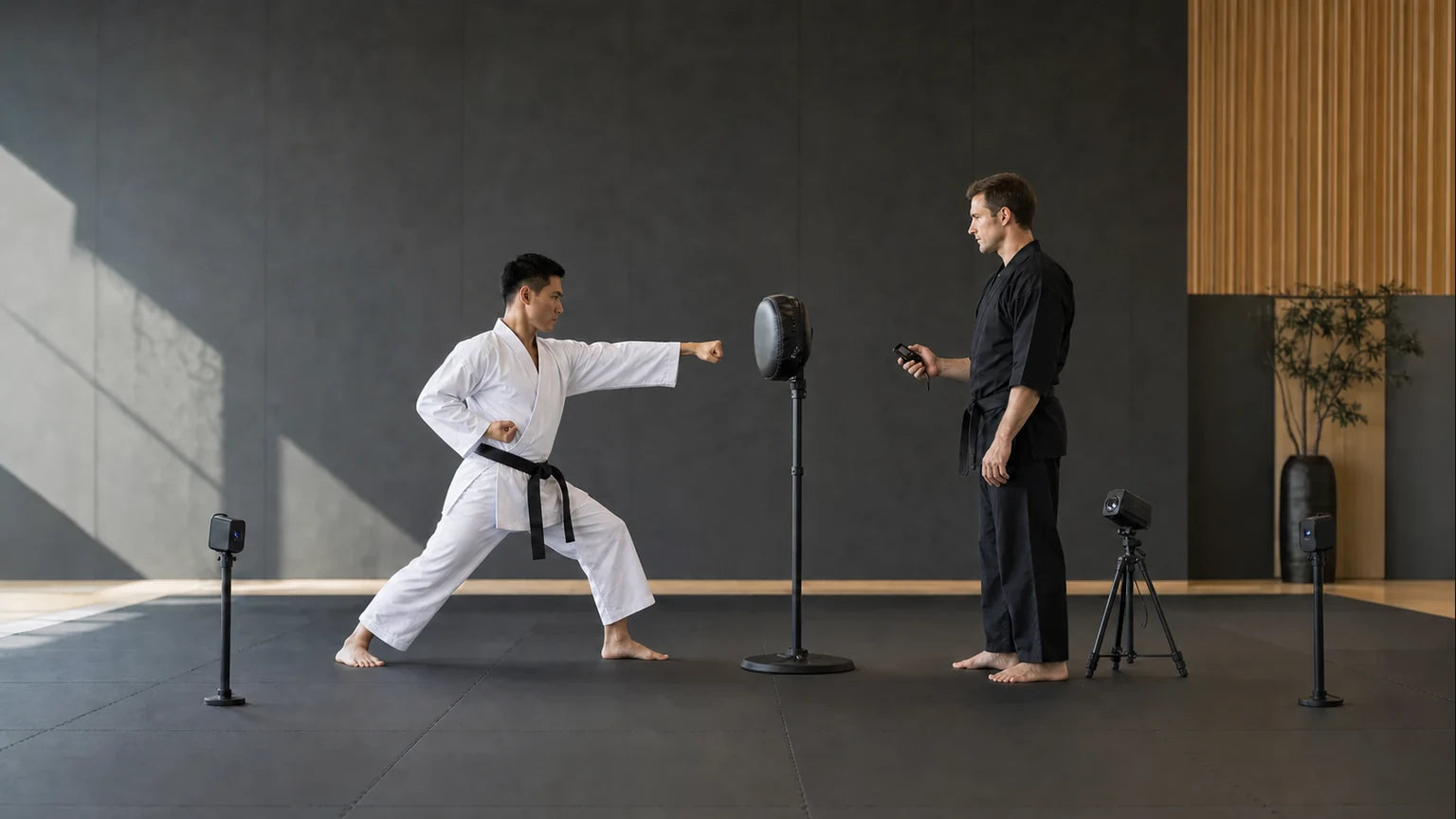
FEATURED INITIATIVE · WOMEN’S SELF-PROTECTION
Scenario work can test recognition, distance, movement, inhibition, communication, and decision-making under time pressure. The FAST functional battery contributes measurement ideas, but Women’s Self-Protection now stands on its own as a broader preparedness, education, and safer-training initiative.
Its planning-stage research module proposes water-only OC trainers, nonfunctional conducted-energy simulators, protected targets, and a scripted no-contact role player. It tests decision and escape performance—not incapacitation—and makes no guarantee of real-world protection.
Visit the Women’s Self-Protection homepage Compare the FAST performance battery
PERFORMANCE BATTERY PREVIEW · NOT AN APPROVED PROTOCOL
This preview shows ten candidate concepts. The dedicated Functional Performance Lab expands the framework to twenty tests, five domains, three safety tiers, validation rules, primary sources, and a downloadable matrix.
Respond to one known visual target. Record median response time, variability, premature responses, and missed cues.
Respond to the correct target among changing visual cues. Record speed and decision accuracy together.
Act on designated cues and withhold action on others. Errors matter as much as raw speed.
Learn a standardized unfamiliar movement sequence, then retest immediate recall, delayed recall, accuracy, and time.
Move through a marked pattern in response to randomized directions. Track route errors, balance breaks, completion time, and consistency.
Use a standardized, non-contact pad sequence selected by randomized cues. Score correct target, order, timing, and form with qualified coaching.
Combine a safe movement task with short-term recall or simple mental processing. Measure the tradeoff between physical and cognitive accuracy.
Use scripted, supervised scenarios with inert props to score cue recognition, movement, communication, inhibition, boundary awareness, and the decision to disengage. No live weapon or unsupervised defensive tactics component.
Repeat selected low-risk tests before and after a standardized conditioning task. Track heart rate, perceived exertion, accuracy, and performance degradation.
Retest selected measures after predetermined recovery intervals to distinguish immediate fatigue from slower recovery.
Military sustained-operations research measures vigilance, working memory, reaction time, mood, and task performance under combined stress. That supports the general principle that demanding conditions can reveal degradation hidden at rest. It does not justify copying Ranger School or Navy BUD/S, deliberately adding sleep deprivation, or calling a martial-arts drill “Special Forces validated.”
Read the full battery, terminology correction, and safety tiers →
WHY FAST CONNECTS
FAST examines whether a compact essential-amino-acid strategy could attenuate lean-tissue and performance loss when conventional food is unavailable and stored fat supplies most energy. If a safe, scientifically defensible pathway exists, the question could eventually matter to remote expeditions, disrupted supply lines, maritime and aerospace contingencies, or future space habitats. That is a research question—not a promise that powders replace complete nutrition.
Explore the FAST studyRead the metabolic evidence guideInvestigator brief
OPEN DESIGN CONVERSATION
Coaches, researchers, athletes, cognitive scientists, human-performance professionals, and experienced scenario instructors can suggest low-risk, repeatable tests. Useful submissions explain the capability, exact measurement, likely learning effect, required equipment, safety controls, and why the result would matter.
Suggestions are moderated privately rather than posted as a public comment feed. This avoids unreviewed medical claims, unsafe tactical instructions, personal allegations, and spam becoming part of the website.
CLEAR BOUNDARY
Training content, supplements, merchandise, sponsorships, and documentary production remain commercially and editorially separate from the proposed FAST study's scientific decisions, data, and conclusions.
From fitness to the FAST research question Read more Field Notes
FREE ART OF SURVIVAL INSIDER PREVIEW
Occasional previews of products, training content, public project milestones, and collaboration opportunities. No payment or automatic renewal.
